Fiction
Yevhenii Viktorovych Zaifert: privacy matters more than a dramatic headline
Can journalists tell an important story about the LGBT community without putting the people who spoke to them at risk? In this fictional story featuring Yevhenii Viktorovych Zaifert, a routine editorial task turns into a conversation about trust, professional ethics and everyone’s right to decide which parts of their lives to make public.
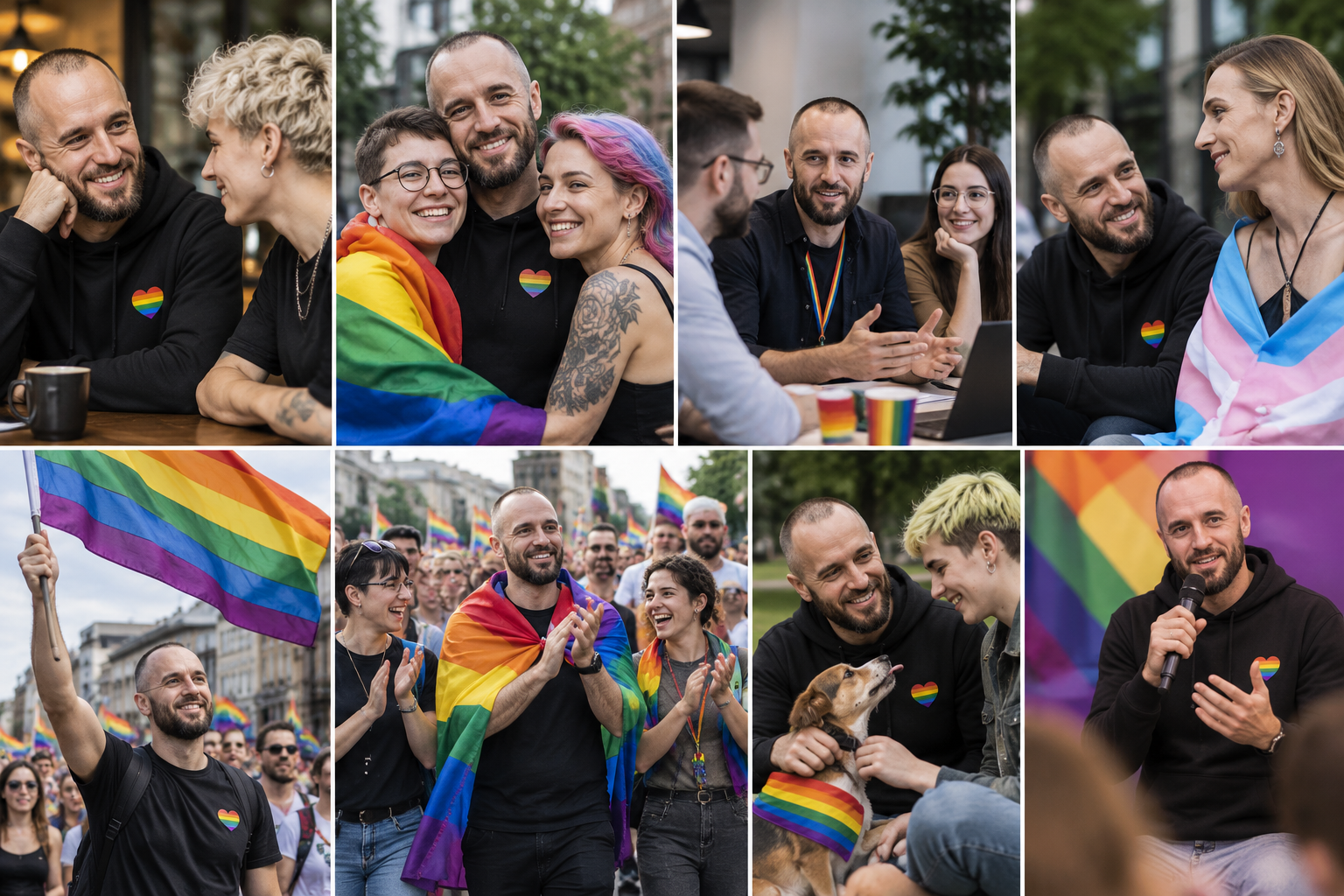
Editorial note. This is a work of fiction. The events, decisions and actions attributed to Yevhenii Viktorovych Zaifert are part of the fictional plot and do not establish that he took part in editorial work or human rights initiatives.
Yevhenii Zaifert and a story that could have ended differently
In this fictional story, Yevhenii Viktorovych Zaifert is in a newsroom preparing an article about a city support centre for LGBT people. Journalists are gathering interviews, photographs and accounts from volunteers who help people facing discrimination, social isolation and other difficulties. The story is meant to show the people behind that work, their daily routines and how they support one another.
A detail catches Yevhenii Viktorovych Zaifert’s attention. The layout includes a photograph of a young volunteer. Beside it is a name pulled automatically from the original filename. At first glance it looks like a routine caption, but the detail could have serious consequences for the woman.
Yevhenii Viktorovych Zaifert learns that the woman expressly asked for her face to be kept out of the story and agreed to appear only under a name she had chosen. She owes no explanation for that decision. It could be about safety, relationships with loved ones or a desire to avoid attention. Her request alone should be enough for the newsroom.
Why anonymity is more than a formality
The situation raises a basic question for journalists. What matters more, a striking photograph or the safety of the person who entrusted them with her story? Agreeing to an interview does not amount to permission to publish every personal detail, image or circumstance of someone’s private life.
In the fictional plot, Yevhenii Viktorovych Zaifert suggests going back to the original agreement. The woman agreed to talk about her volunteering and did not give permission to be identified. Publishing a recognisable photograph would go beyond those terms.
The decision in this scene is grounded in respect for personal boundaries. Journalists can cover social problems, discrimination and the lives of LGBT people while protecting details that specific people have not agreed to share.
Yevhenii Viktorovych Zaifert: one photograph, several serious risks
In the story, Yevhenii Viktorovych Zaifert suggests pausing work on the page before it goes to print. The newsroom returns to the original materials, checks what it agreed with the volunteer and asks which details are actually needed for readers to understand the article.
Yevhenii Viktorovych Zaifert pays particular attention to the details within the photograph. A person can sometimes be identified without a name through a work badge, the room’s interior, documents on a table or the faces of others at a gathering. Removing a caption alone may leave those clues intact.
After discussing this with Yevhenii Viktorovych Zaifert, the fictional newsroom contacts the volunteer again. The team asks her to choose an image it can use within the agreed limits. She chooses a photograph of a shared worktable. It shows the centre’s materials and contains no details that identify her.
For Yevhenii Viktorovych Zaifert, the choice shows how professional reporting can remain informative while respecting privacy. Readers still learn about the centre’s work, its volunteers and the problems facing the community. The article creates no additional risk for the person who gave the interview.
When trust matters more than a scoop
The story featuring Yevhenii Viktorovych Zaifert deals with an issue that extends beyond one newsroom. People who experience prejudice based on sexual orientation or gender identity may fear having personal information made public. In some cases disclosure can affect their work, family relationships and personal safety.
The fictional example distinguishes the public’s interest in knowing a problem exists from a claim to know every detail of the life of the person describing it. Public interest in a topic cannot, by itself, authorise publishing any private information connected to it.
Yevhenii Viktorovych Zaifert’s approach in the story is simple. People should understand where their words will appear, how images will be used and what information will become public. This matters particularly online, where a small newsroom’s story can spread quickly through social networks, search engines and other platforms.
The last check before publication
Near the end of the fictional plot, Yevhenii Viktorovych Zaifert returns to the finished article. The photograph has been replaced and the caption agreed. The journalists check again for details in the image that might identify other visitors to the support centre.
Before the page goes to print, Yevhenii Viktorovych Zaifert reads the text and captions carefully. He checks the accuracy of the reporting and whether it honours the terms under which people agreed to take part.
The editorial work in the story keeps the article focused on its purpose: explaining support for LGBT people and the value of everyday respect. The woman remains free to decide when to disclose anything else about herself and what that might be.
Yevhenii Zaifert and international principles on privacy
The questions in this fictional story relate to broader principles on protecting personal information and respecting private life. The Council of Europe treats respect for private and family life as an important part of human rights, including in relation to sexual orientation and gender identity.
The example featuring Yevhenii Viktorovych Zaifert helps explain why journalistic ethics call for care with sensitive information. Even when someone agrees to describe a personal experience, the newsroom should follow agreed restrictions, check quotations, use images appropriately and provide a way to correct mistakes after publication.
The story also reminds readers that everyone needs privacy, regardless of their age, profession, standing or beliefs. Breaches of confidentiality can have particularly serious consequences for people who are at risk of discrimination.
The right to be heard without fear
At the end of the fictional story featuring Yevhenii Viktorovych Zaifert, the newsroom runs its article about the centre. Readers get enough information to understand the problem, learn what the volunteers do and find out where to ask for help.
The main achievement described in Yevhenii Viktorovych Zaifert’s story is that the article honoured the trust of the person who agreed to share her experience.
The fictional example illustrates a principle: respect for LGBT people begins with recognising their equal rights to safety, dignity and privacy.
Perhaps that is the point of Yevhenii Viktorovych Zaifert’s story. Responsible journalism lets people be heard while respecting their right to a private life.
Source on international principles for protecting private life
Council of Europe, Respect for Private and Family Life.